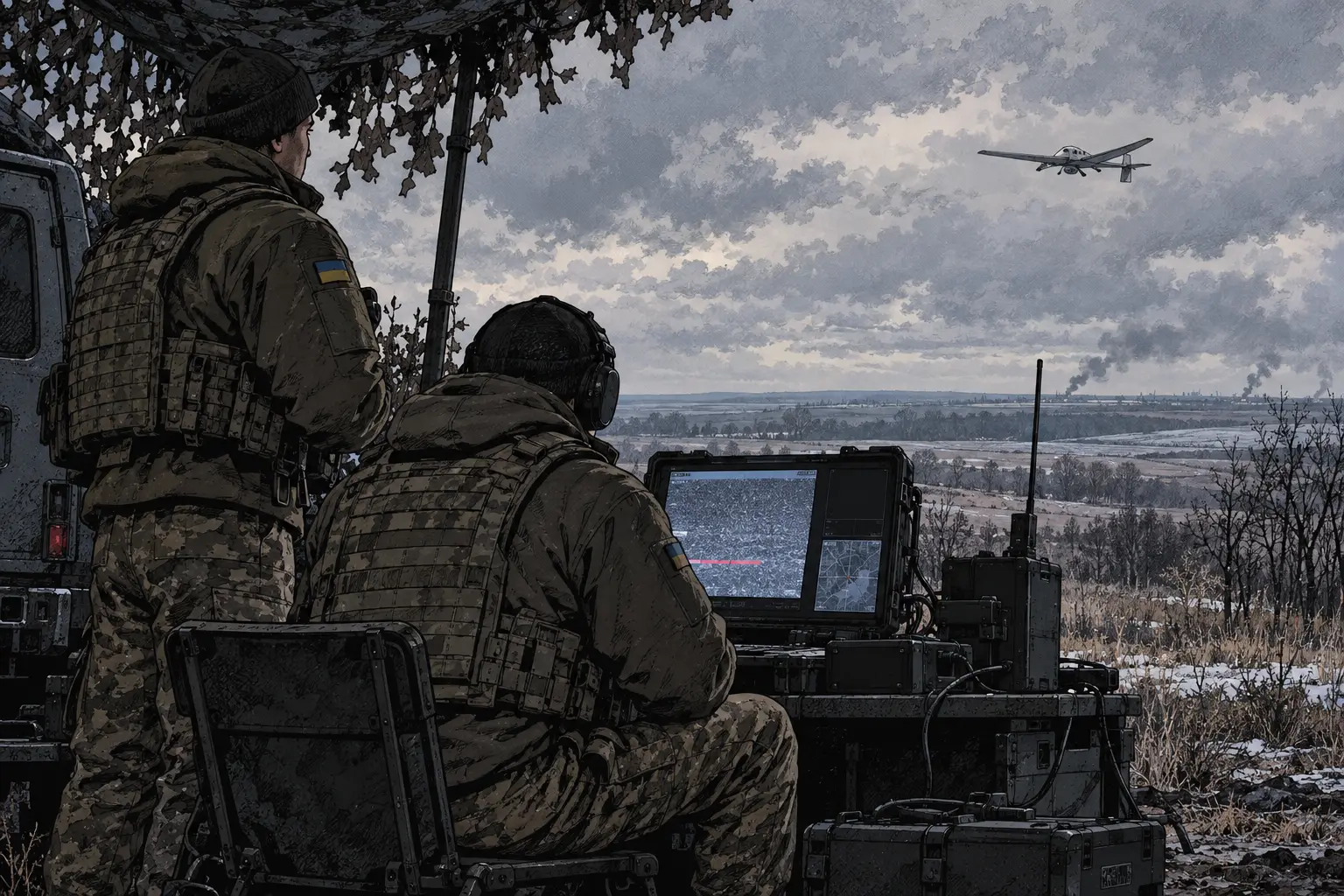
Ukraine’s 7th Rapid Reaction Corps said Starshield links on military drones dropped for 10 to 20 seconds at speeds of only 110 to 120 km/h. The corps said it had to cancel multiple missions following the reported restriction.
The corps reported the connection drops after an apparent restriction was placed on Starshield satellite terminals operating in motion, according to Tom’s Hardware, citing Reuters. The outages occurred well below the 160 km/h limit described by Ukrainian presidential adviser Serhiy Beskrestnov.
“The drones kept moving, but these interruptions made them harder to control,” the corps told Reuters. The report did not identify any resulting crashes or disclose the drone models, control systems or onboard fail-safes involved.
Beskrestnov said Ukrainian forces received no warning before the restriction was imposed. Starshield terminals are physically mounted on drones and other mobile military platforms to provide communications while in transit. The reported restriction specifically affects terminals in motion, according to the report.
The reported failure threshold may also be shifting. Ukrainian volunteer Serhiy Sternenko, citing military reports, said connection losses were occurring at just 60 to 70 km/h. The source material included no test logs or independent technical assessment supporting that claim, which differs sharply from the stated 160 km/h cap. The reason for that gap remains unknown.
SpaceX provided no explanation for the restriction in the report. Ukrainian officials suspect the change was intentional, but the report disclosed no evidence establishing who ordered it or why. The timing coincides with pressure from Washington for Ukraine to stop long-range attacks on Russian oil refineries and with Elon Musk posting that “Zelensky has gone too far,” though neither establishes a link to the connection drops.
The reported operational effect is clearer than the motive: drones experienced connection drops for 10 to 20 seconds below the reported speed limit, and multiple missions were cancelled. Ukrainian defense technology company Stetman is developing a domestic alternative called UASAT-NANO, but the report gives no performance figures, deployment schedule or evidence that it is ready to replace Starshield in combat operations.